Our Q3.Quartier für Medien.Bildung. Abenteuer x Media Education Partnership
Through the 2025–26 Cultural Bridge Tier 1 programme, we — Q3 (Traunstein, Germany) and Media Education (Scotland)— have been able to build a partnership rooted in shared values, mutual learning, and a belief in the power of filmmaking as a tool for creativity, community empowerment, and social change. Although our methods and local contexts differ, we discovered early on that we are united by a commitment to participation, inclusion, and ethical, community‑centred practice.
Over the past year, we have used the Tier 1 Cultural Bridge funding to explore not only what we do, but also how and why we do it — and how we can strengthen our approaches by learning from each other. This exchange has already begun to influence our future work, laying a strong foundation for long‑term collaboration.
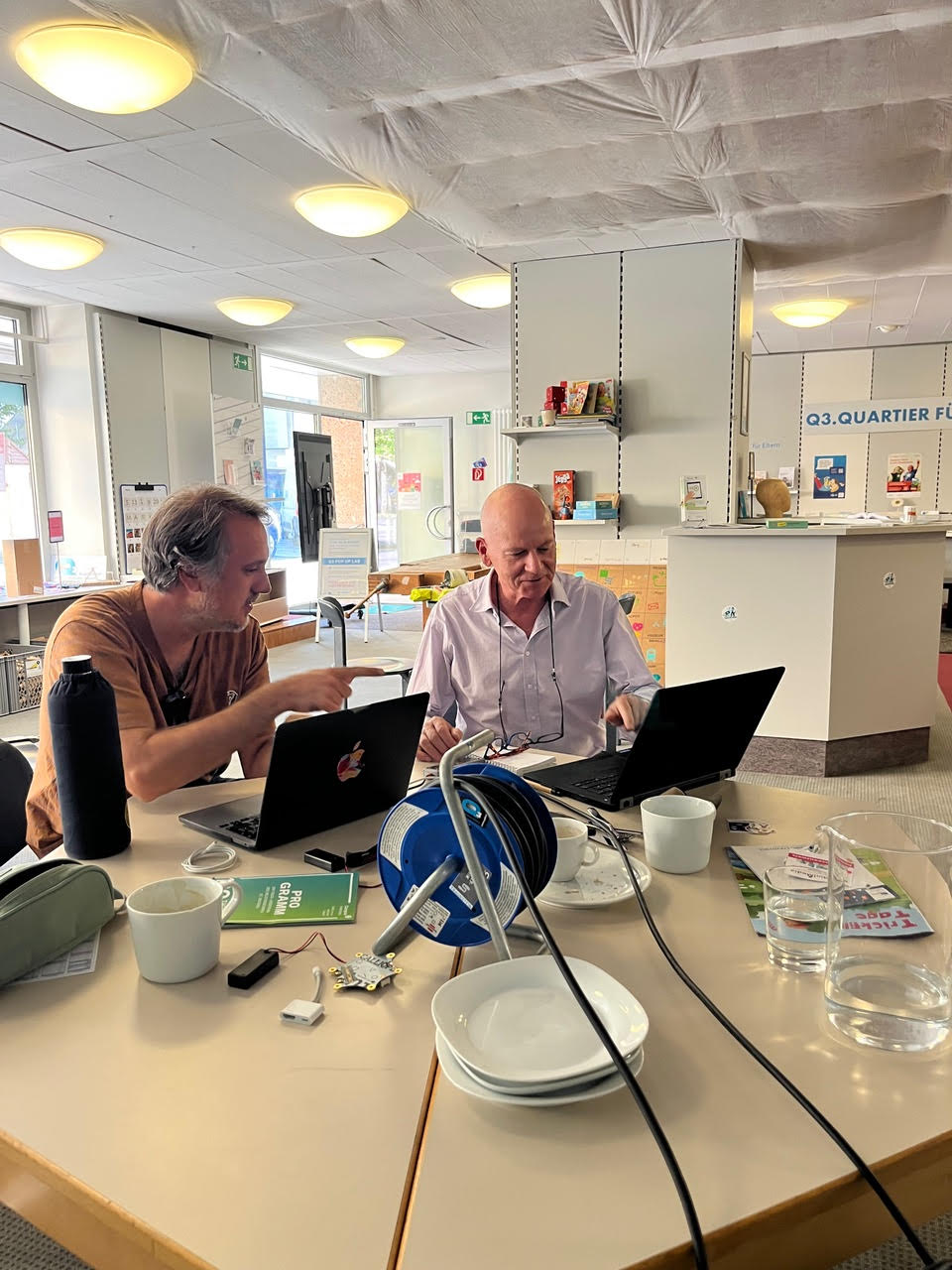
Image: Q3, Traunstein, Germany. Project meeting between Lawrence Martin (Q3) and Iain Shaw (Media Education)
What we have been learning from each other
Supporting creativity and individual voices:
Both organisations use filmmaking to help people articulate their experiences and explore personal and collective identity. During Media Education’s visit to Traunstein, Germany, in July, Q3 shared insights into low‑threshold participation methods, techniques for involving families, and approaches for building sustainable structures for youth and community work. These methods demonstrated new pathways for lowering barriers and broadening participation across diverse communities.
During Q3’s visit to Edinburgh, Scotland, in October, we met Media Education’s Thrive Steering Group, an intersectional youth steering body. Their reflections on representation, agency, and personal growth through filmmaking offered a powerful perspective on how creative work can support confidence, leadership, and long-term engagement. These encounters have strengthened our understanding of how film can amplify individual voices while supporting collective identity.
Empowering communities to shape place, identity, and collective agency:
A central theme emerging from our exchange has been inclusion. We explored strategies for reaching people who feel disconnected from cultural spaces and for creating meaningful incentives and rewards for engagement. Across multiple conversations — both online and in-person — we reflected on how to design environments that invite participants to take ownership of their stories and experiences.
Media Education’s participatory action research approach opened new perspectives on evaluating community impact while centring the lived experiences of participants. Q3’s work in rural communities provided contrasting insights into grounding creative practice within local identities and community structures. Together, these approaches are informing how we shape future initiatives.
Connecting arts and society through co‑creation:
Our partnership places strong emphasis on co‑creation. Throughout the year, we exchanged approaches to jointly designing film projects with communities and embedding critical conversations around identity, ethics, and representation into the creative process. A shared focus emerged: ensuring that participants, families, and local partners have agency in shaping both the content and the methods of the work.
These exchanges underscored that filmmaking can play a dual role: as a creative practice and as a tool for dialogue and collective agency.
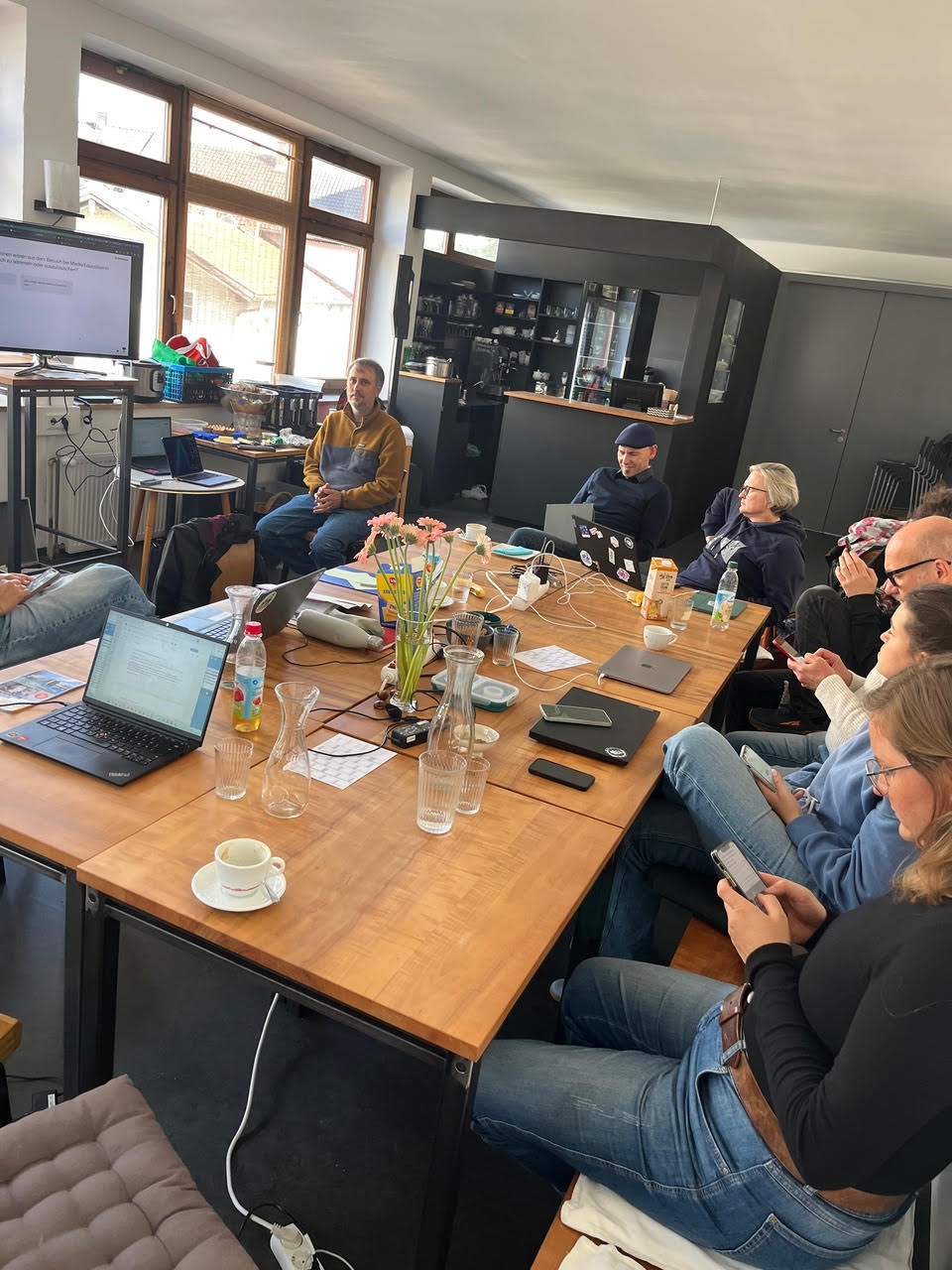
Image: The Q3 Team take part in a digital interactive feedback session as part of a presentation on the Cultural Bridge Project.
New Perspectives Gained
The Cultural Bridge process has provided new perspectives in several areas:
Ethics and protection in community filmmaking:
We engaged deeply with questions around protection concepts, data security, and representation. Understanding how each organisation navigates ethical challenges has helped us strengthen our internal practices, particularly when working with vulnerable groups.
Long‑term relationship building:
Tier 1 offered the time and structure to build trust, allowing our collaboration to evolve gradually from initial conversations to shared reflection and concrete planning.
Experiencing each other's contexts:
Seeing each other's work environments — from the rural Bavarian communities Q3 supports to the urban, intersectional groups Media Education works with — expanded our understanding of how place and context shape community arts practice.
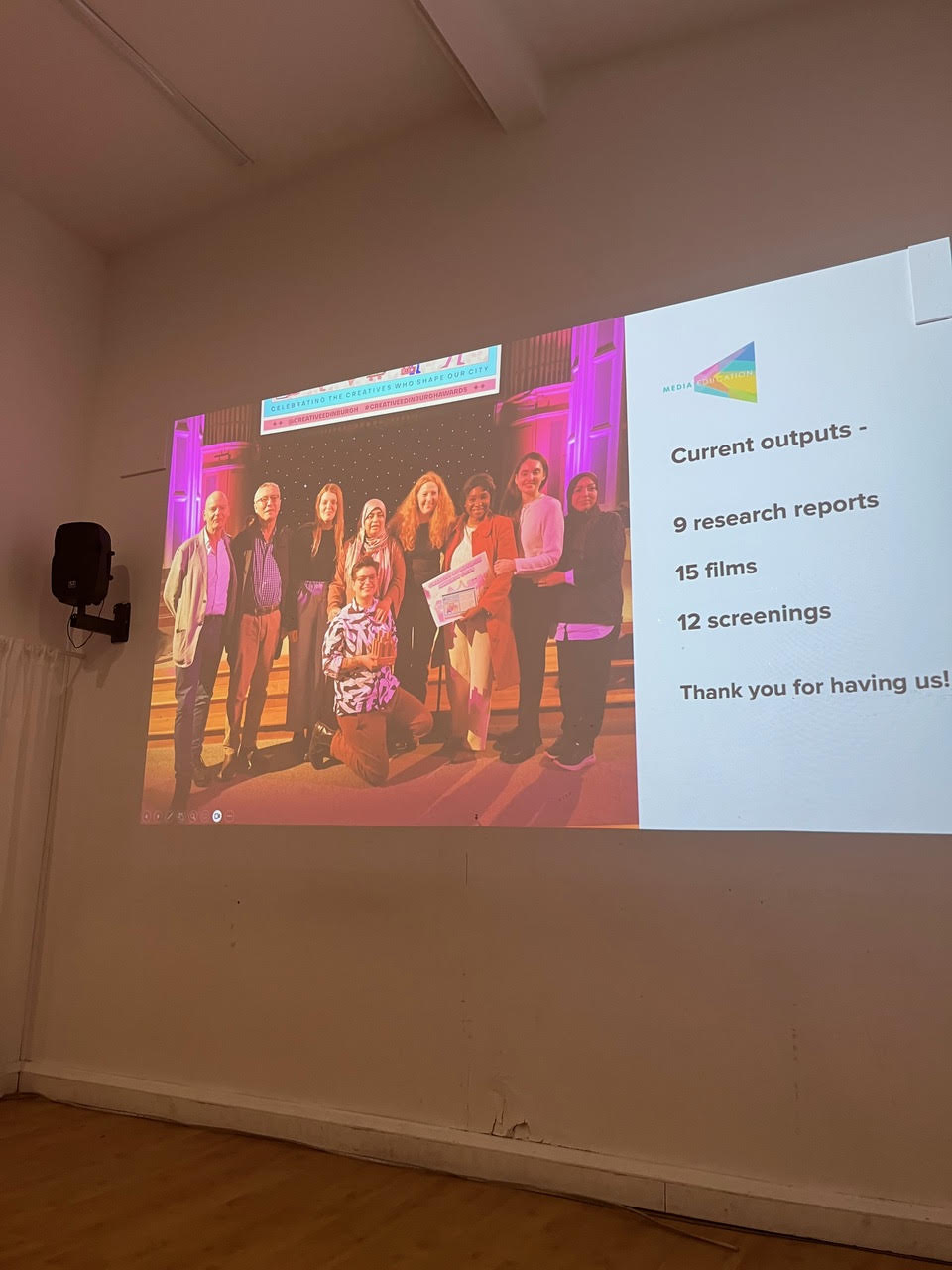
Image: Media Education present their organization to Lawrence Martin and Sabina Schneider from Q3 on their visit to Edinburgh.
Why an International Platform Matters
An international collaboration offered opportunities for reflection and learning that would not have emerged in a purely local context. It allowed us to examine our assumptions, confront cultural and structural differences, and appreciate the varied ways in which communities engage with film and creative practice. The Cultural Bridge programme enabled us to engage in sustained conversation and mutual learning, which is essential for meaningful and responsible development of community‑centred work.
Addressing the Cultural Bridge Themes
Both organisations work in contexts shaped by strong local histories—post‑industrial Scottish communities and rural Bavarian settings. Filmmaking becomes a space where people can reflect on local change, explore identity, and articulate future visions for their communities. Our discussions frequently returned to a shared challenge: how to reach individuals and families who, due to geography, social barriers, or identity, have limited access to cultural participation. Insights into outreach strategies, partnership models, and low‑threshold entry points are shaping our future programme design. Meeting the Thrive Steering Group offered valuable learning about youth‑led activism and shared leadership. Their role in shaping Media Education’s direction and outputs inspired reflection on how to embed participant leadership more deeply in our own structures.
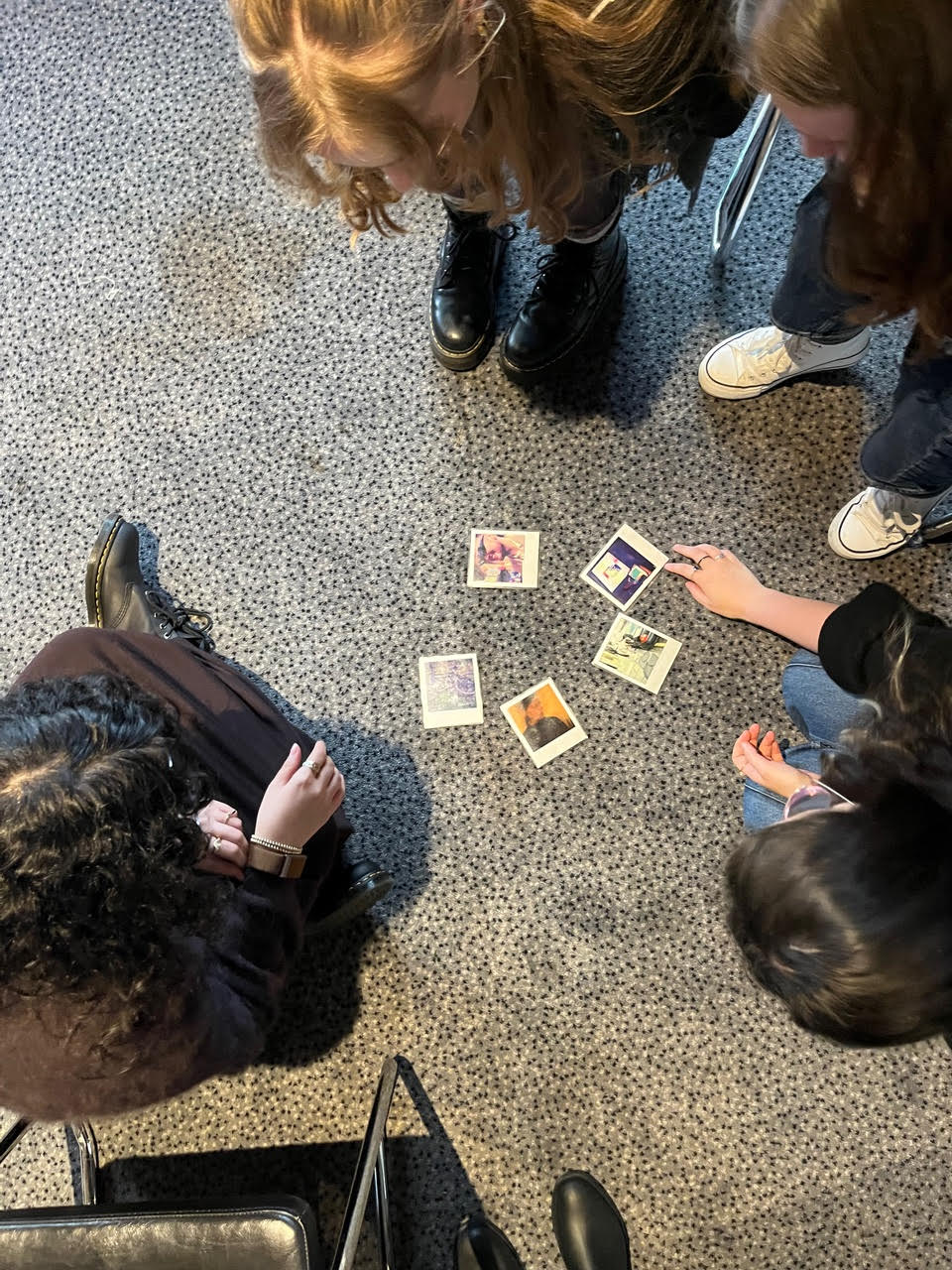
Image: Lawrence Martin and Sabina Schneider (Q3) take part in a cohort event hosted by Media Education at Edinburgh University.
Tier 1 Outcome: Joint Public Presentation
A key milestone of our Tier 1 collaboration is our joint public presentation as part of the Chiemgauer Media weeks in south east upper Bavaria, Germany:
“How Filmmaking Can Be Used as a Tool for Community Empowerment and Social Change” 10. März 2026, 17:00 – 18:30 CET
Event link: https://chiemgauer-medienwochen.de/veranstaltung/cultural-bridge/
This session brings together our shared learning from the past year and opens a public conversation on participatory filmmaking as a driver for community visibility, agency, and social change. Join us!
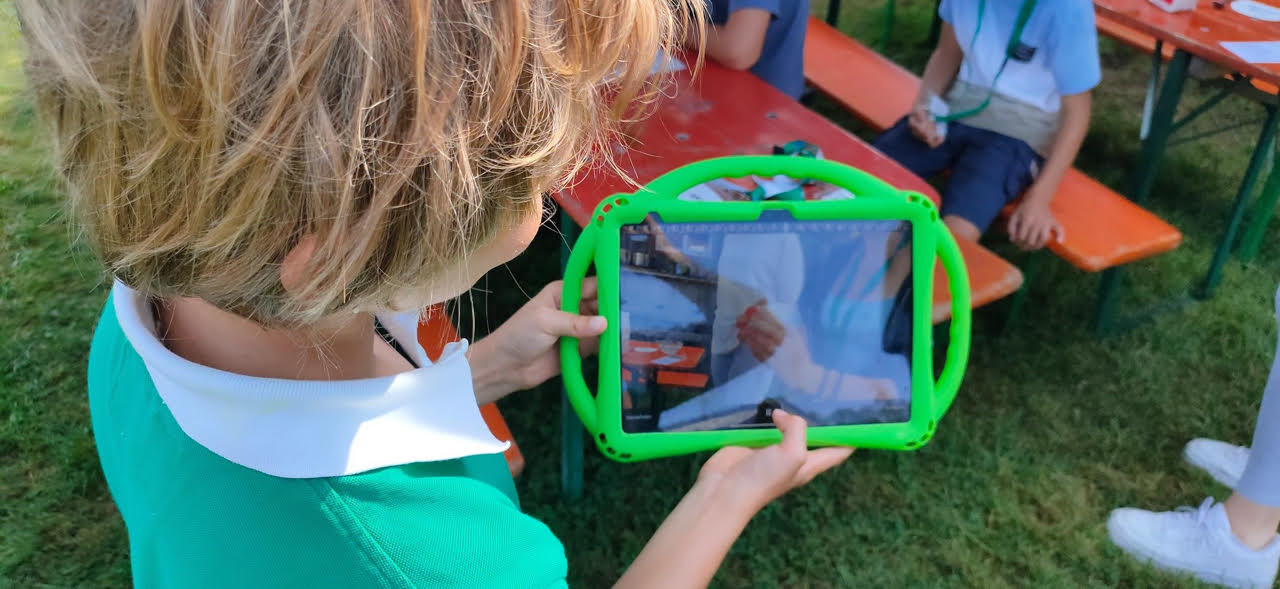
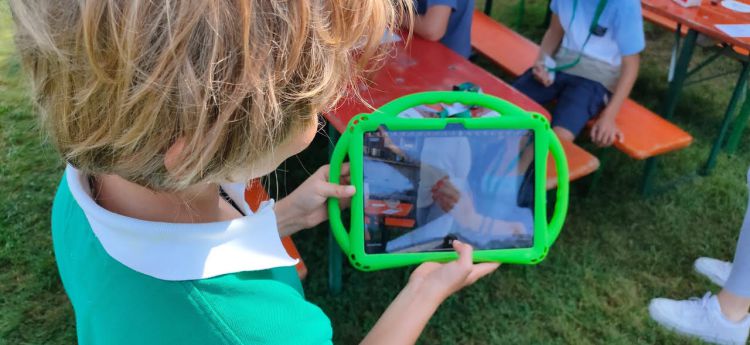
Image: Iain Shaw (Media Education) observes a participant during one of Q3’s summer workshops on a farm which combines media education with learning about farm life.
Looking Ahead
Tier 1 has provided a strong foundation built on trust, shared values, and honest reflection. Our partnership has strengthened our practices, introduced new perspectives, and opened-up pathways for deeper collaboration. We look forward to developing joint initiatives and continuing to build opportunities for inclusive, ethical, and community‑rooted film work across Scotland and Germany.
We are grateful to the Cultural Bridge programme for enabling this exchange and supporting the development of cross‑border collaboration in community arts practice.