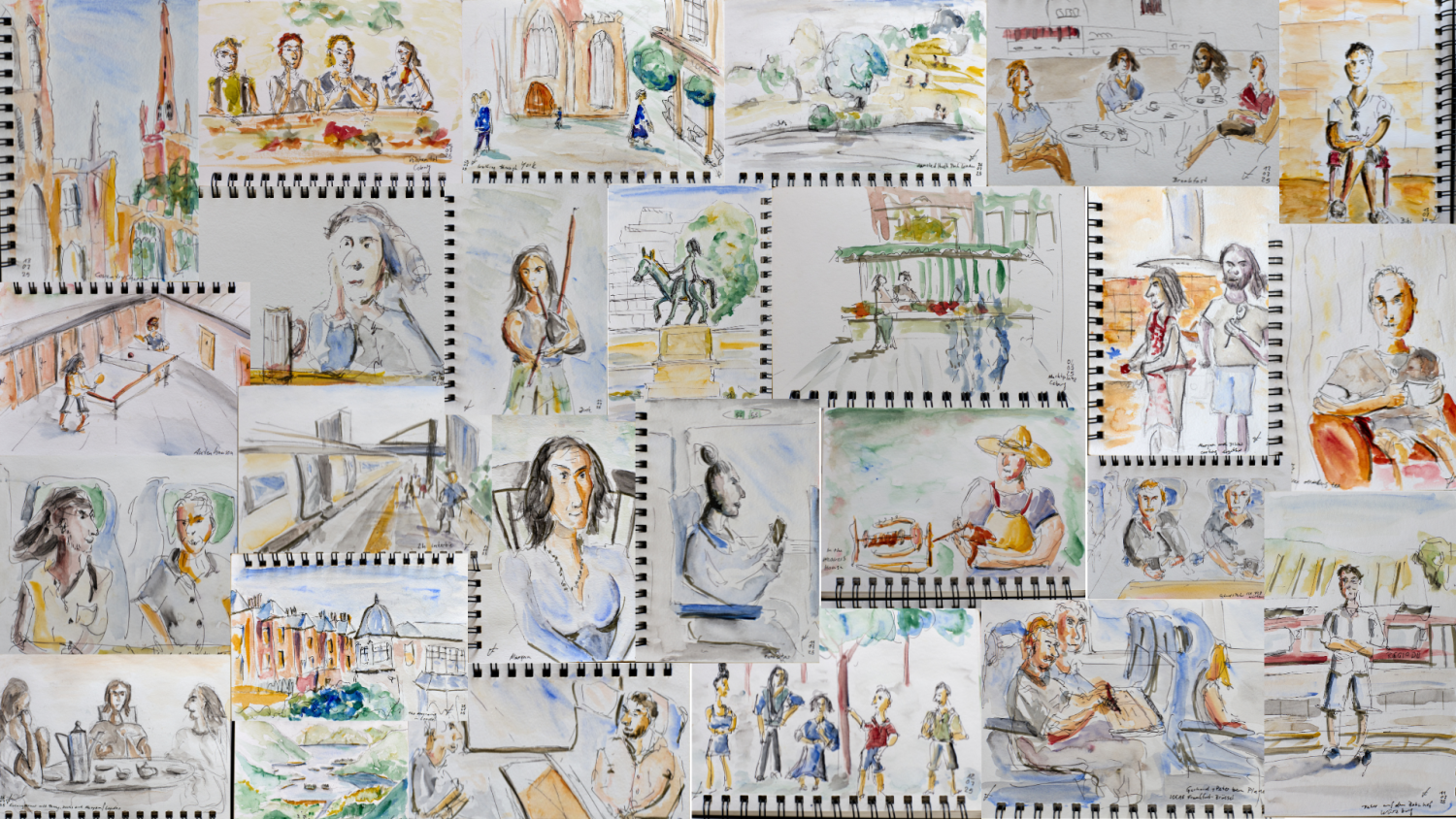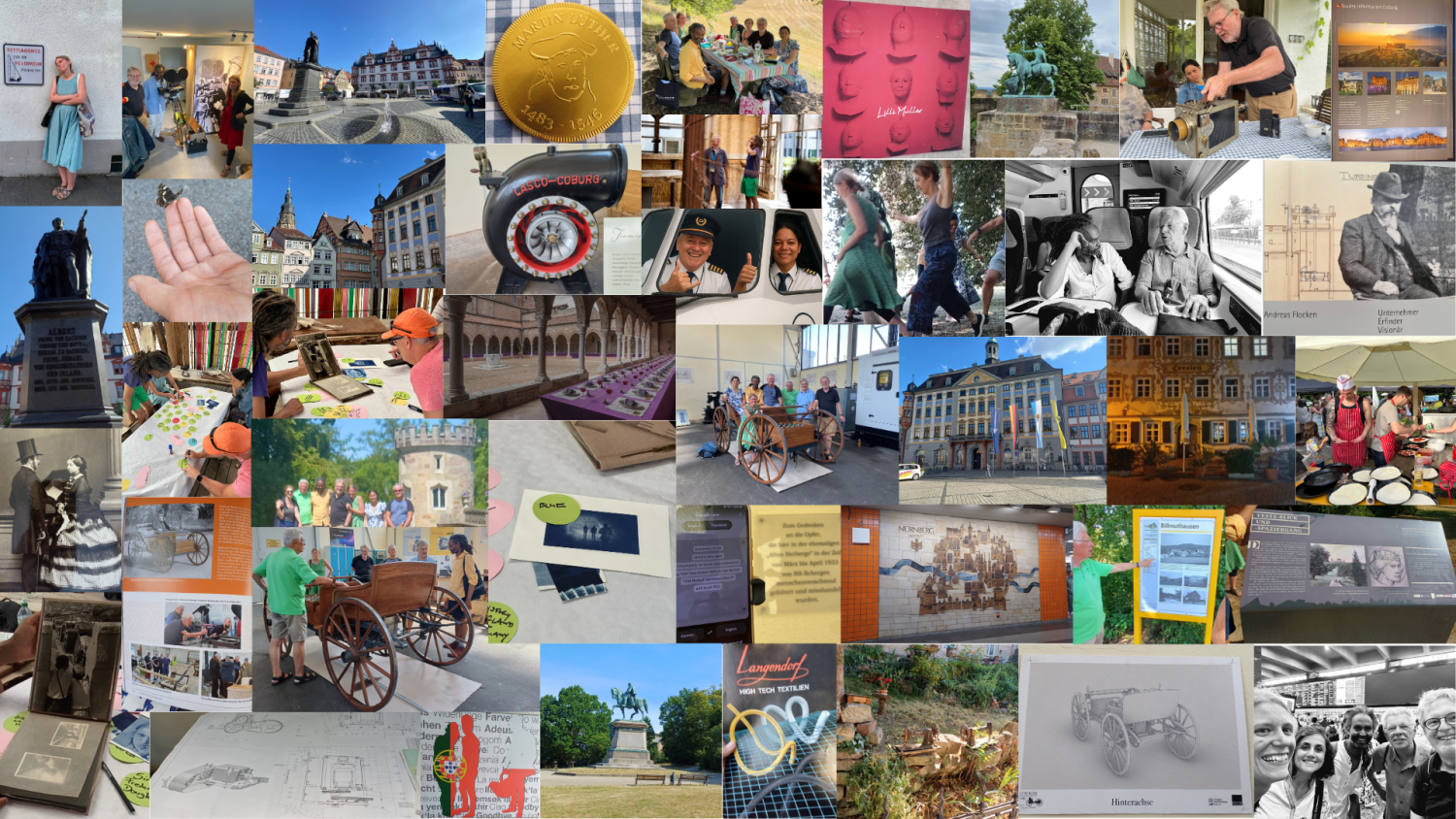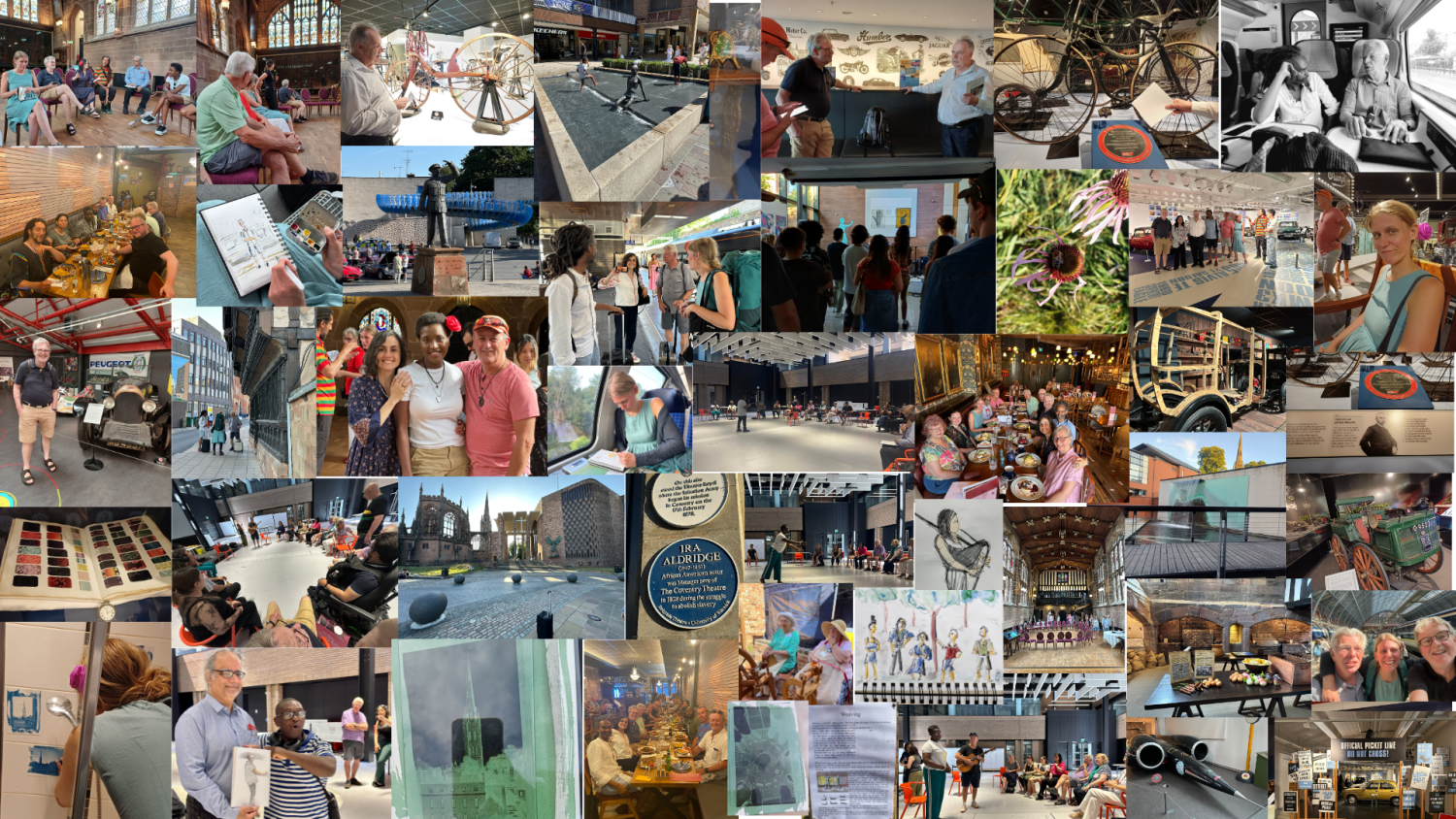
This blog is part of a series produced by Intercultural Roots for Public Health (Coventry, England) as part of their Tier One partnership with MakingCulture® e.V. (Coburg, Bayern). Find out more about their partnership
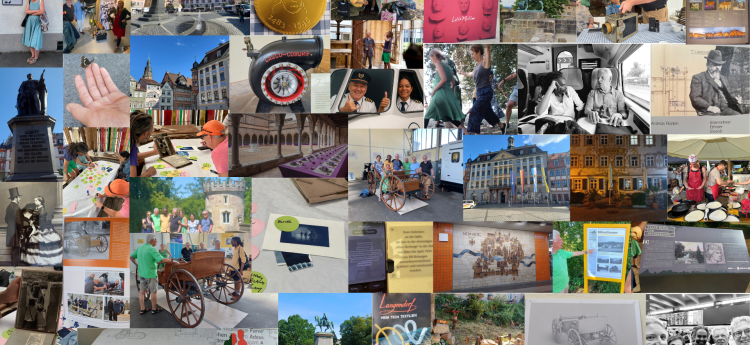
The cities of Coventry, UK, and Coburg, Germany, might seem like worlds apart, yet a recent 'Bridging Cultures' initiative has uncovered a remarkable number of historical, industrial, and artistic connections between the two. Through workshops and collaborative projects, participants explored the similarities, differences, and shared history that binds these two locations.
Workshop: Similarities and Differences
During a dedicated workshop, participants were asked to compare Coventry and Coburg. Artist Lilly used a schematic representation of the two skylines to highlight some easy-to-spot differences. For instance, the Coburg skyline features a figure on a horse, while Coventry's features Lady Godiva, alongside various church steeples.
However, the search for similarities proved just as fascinating, revealing shared themes of industry and historical figures.
Two Cities, Intercultural Roots
The bridge between the two cities is built by two partnering organisations: Intercultural Roots (based in Coventry, England) and MakingCulture® e.V. (based in Coburg, Bayern). This partnership is central to the project's success.
The similarities also extend to manufacturing industry and a connection through dye and colour:
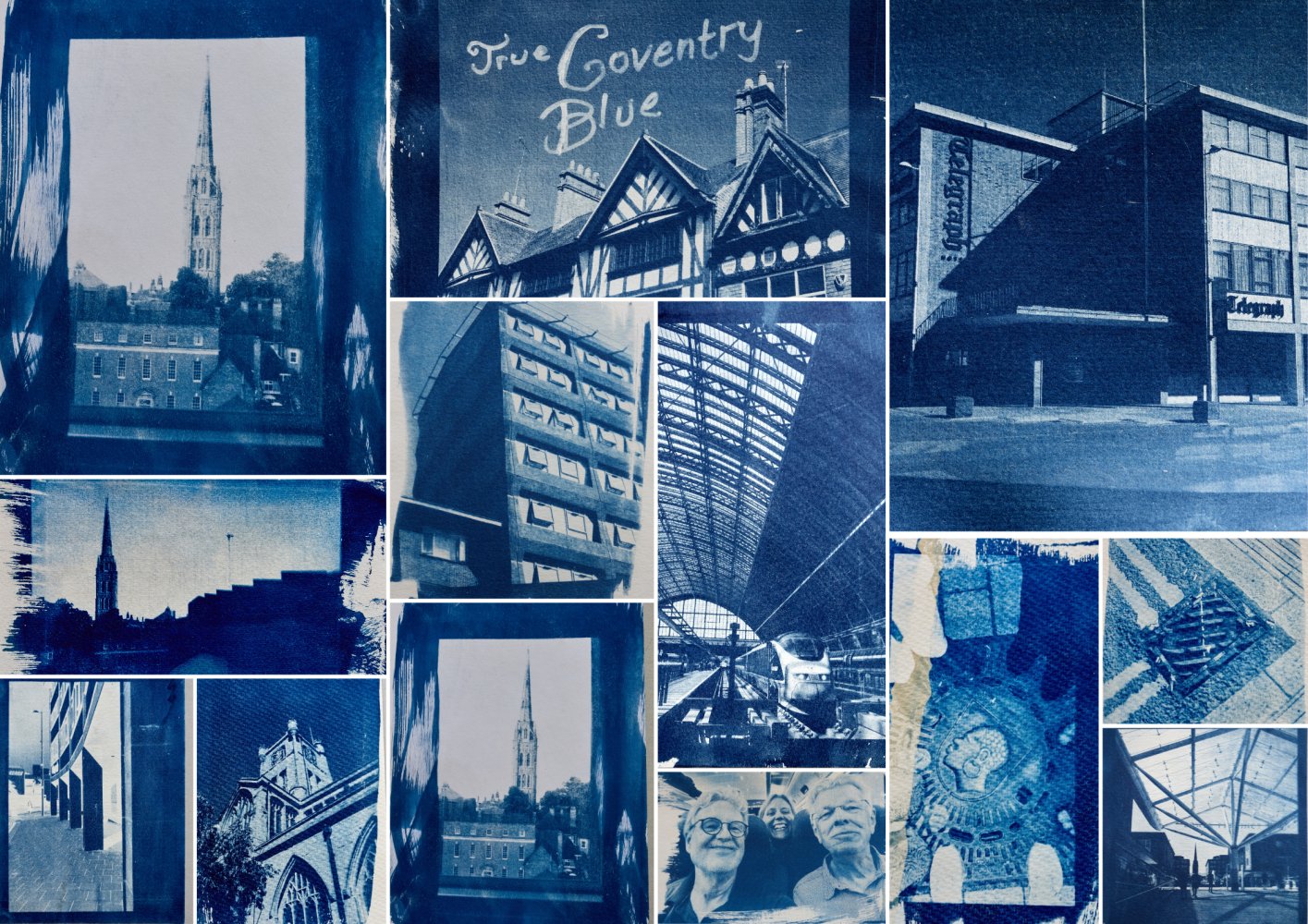
- Coventry is famous for its "True Blue", a dye whose recipe was a secret, but whose production turned the river water blue. The phrase, "That's as true as Coventry Blue," is still used today.
- Near Coburg, the historic "Blaufabrik" (Blue Factory) operated from 1772 to 1972 and was the region's first chemical factory. It primarily produced "Prussian Blue" dye for textiles and paper. This shared theme later inspired a cyanotype workshop.
Historical Figures and Connections
The project illuminated several direct historical links, often crossing paths in the two cities:
- Prince Albert: The city of Coburg is the birthplace of Prince Albert, the husband of Queen Victoria, providing a direct connection to the United Kingdom. He is known for many things in the UK, including the Victorian Albert Museum, and his connection to the Queen remains one of Coburg's most important historical events.
- Ira Frederick Aldridge: This renowned African-American actor fled discrimination in the US and made his debut at London's Royal Coburg Theatre (now the Old Vic). Later, in 1828, he became the manager of The Coventry Theatre, during the struggle to abolish slavery.
War and Industry
Both are old medieval cities, but while the medieval part of Coventry was partially destroyed by bombing and later transformed by modernisation, Coburg's historical character has been largely preserved.
The project also highlighted the role of both cities in the war industry:
- Coventry's Courtaulds, a large textile manufacturer, produced synthetic fibres and manufactured armaments during World War II.
- Coburg's Brose company was also an armaments manufacturer during the war, producing jerrycans for the Wehrmacht. The distinctive shape of the jerrycans was later produced by Brose for the British War Department after the war.
Looking to the Future: Community and Textile
The project’s most powerful discovery lay in the underlying concepts that unify the two cities:
- Textile as Metaphor: The word "Coburg" itself is thought to mean "a kind of fabric". This led to the metaphor of textiles, where threads interlock, layer, and cross, representing connection, collaboration, cooperation, but also for contrast. This theme brought the “Co” back into play, standing for connection and cooperation.
- Community: The older spelling of 'Covent,' which gives Coventry its name, is "Covenant," referring to a community. This idea of community and fellowship has been described as the "golden key" of the project. As Coventry, a city of peace and reconciliation, works to move beyond its painful past to envision a hopeful future, the concept of community offers a new revelation that can be brought back to Coburg.
The 'Bridging Cultures' project successfully used these shared stories to encourage reflection and learning, proving how important it is to look at one another in the mirror.